
Your Business Data Is Ready. Now Make It Work Harder.
Databroker Summer Series - Part 7 of 8 – Building Your Best Q4 Starts Now
Over the last six parts of our Summer Series, we’ve spent a lot of time getting the foundations right. We’ve looked at building your pipeline, improving your CRM, understanding the cost of bad data, targeting the right businesses, finding the right decision-makers and keeping all that information accurate. So, let’s assume you’ve done all of that. You’ve now got clean, accurate and well-targeted business data, containing organisations you genuinely want to work with and the right people within them.
What happens next?
Even the best business data in the world isn’t going to generate a single enquiry if it just sits in your CRM. The next step is turning that data into conversations, opportunities and, ultimately, customers. Quality business data is the foundation of good B2B marketing. Once you’ve got the audience right, the next challenge is putting it to work.
In 30 Seconds
- Good business data gives you the audience; it doesn’t do the selling for you.
- Email, telephone, LinkedIn and direct mail can be stronger when used together.
- Segmentation helps make your message more relevant.
- Your best prospects may deserve a more personalised approach.
- Sales follow-up is every bit as important as the initial campaign.
Which Works Better - Email or Telemarketing?
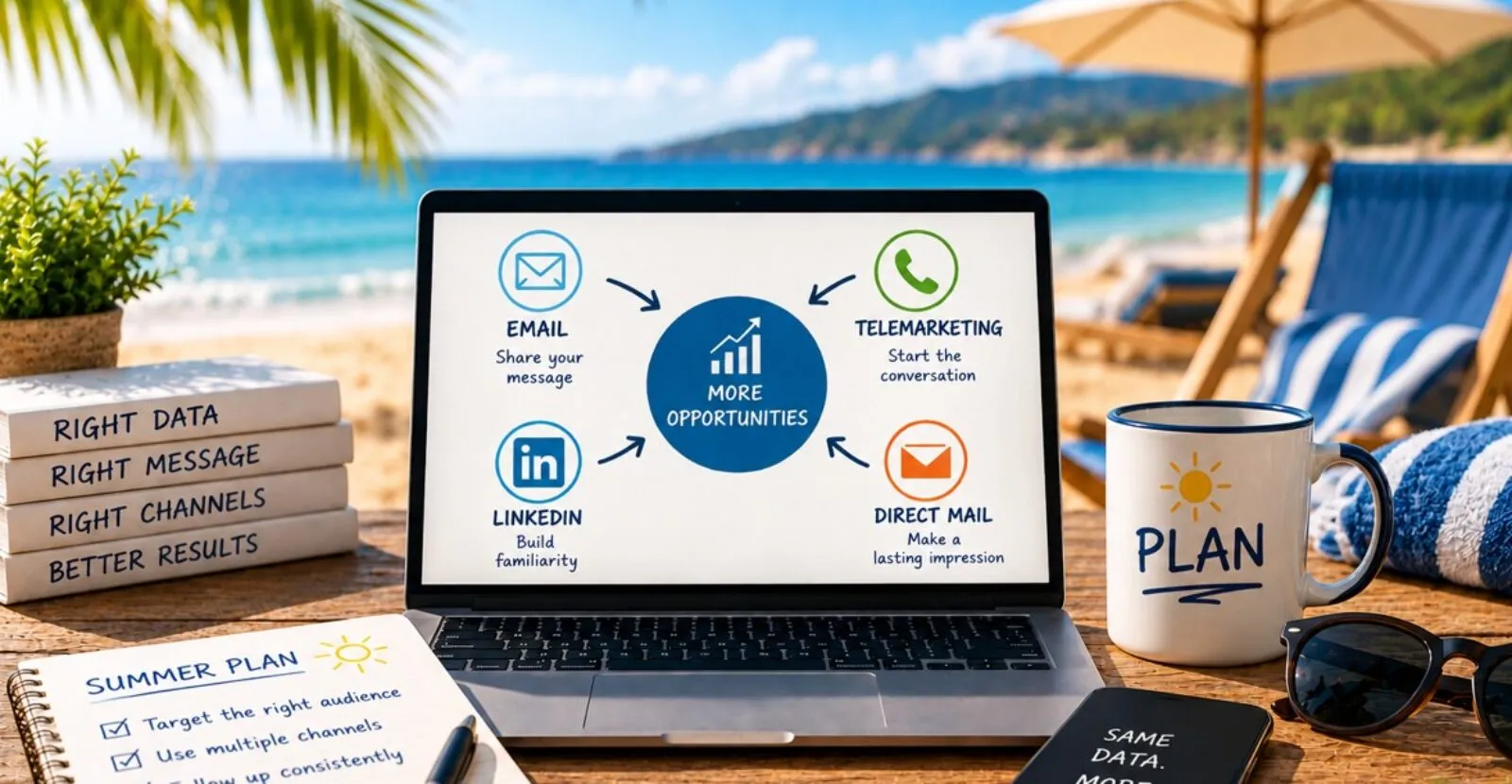
It’s a question I’ve been asked plenty of times over the years and my slightly unhelpful answer is: it depends. Some audiences respond brilliantly to email, while others are much easier to engage over the telephone. LinkedIn can help build familiarity before a salesperson makes contact, and direct mail can still work extremely well when you’re targeting a relatively small number of high-value prospects.
But perhaps the better question is: why do you necessarily need to choose just one?
If somebody has seen your company on LinkedIn, received a relevant email and then gets a well-timed telephone call, that conversation can feel very different to a completely cold approach. The same accurate business data can support several coordinated sales and marketing activities rather than being uploaded into one campaign and forgotten about.
Make Your Business Data Work Across Different Channels
One of the biggest advantages of having good business data is the ability to segment your audience properly. Imagine you’re targeting 50,000 companies. Within that database you might have SMEs and large corporates, manufacturers and retailers, Finance Directors and Operations Directors, existing customers and completely new prospects. They shouldn’t necessarily all receive the same message.
A Finance Director may be interested in cost, ROI and efficiency, while an Operations Director might care more about implementation, productivity or solving a particular operational problem. Your biggest potential accounts might also justify considerably more attention than the rest of the database.
Segmentation lets you take one audience and create several more relevant conversations from it. That’s far more meaningful than superficial personalisation which simply drops somebody’s first name into an otherwise generic email. Learn more about our different business data lists here.
From the Databroker Desk
We sometimes see businesses invest a lot of time and money creating a really good target database and then treat the actual campaign almost as an afterthought. The data gets uploaded, one email goes out and everybody waits for the leads to arrive.
Sometimes that will produce results, but it’s rarely the best use of the data. Before a campaign starts, I’d want to know what we’re saying, which channels we’re going to use, whether different parts of the audience need different messaging, how the sales team will follow up and what happens to prospects who don’t respond first time. The business data is the foundation for all of that, but it isn’t the whole campaign.
Give Your Best Prospects More Attention
Not every prospect is worth the same amount to your business. If you’ve identified 50 organisations that would each represent a major opportunity, it probably doesn’t make sense to treat them exactly the same as another 50,000 prospects in a wider campaign.
This is where account-based marketing can be useful. Identify the companies that matter most, understand the relevant people within each business and build a more concentrated approach around them. That could involve personalised email, LinkedIn activity, telephone contact, direct mail or content relevant to that organisation or sector. It doesn’t have to become ridiculously complicated. At its simplest, it’s recognising that your best prospects deserve more of your attention.
Great Data Still Needs Great Follow-Up
You can have the perfect audience and a brilliant campaign, but if somebody shows interest and nobody follows it up properly, you’ve still wasted the opportunity. Sales and marketing should be working from the same information. If someone responds to an email, downloads something or has a conversation with your team, that intelligence becomes far more useful when it’s recorded and acted upon.
It should work the other way too. Perhaps a salesperson discovers that a prospect’s contract renews in six months, they’ve asked to be contacted next quarter or another person is involved in the decision. That information should feed back into your CRM rather than disappearing into someone’s notebook or inbox.
Your business data gets more valuable when people actually use it and continue adding to it.
Technology Should Help, Not Get in the Way
There’s no shortage of technology promising to automate prospecting, identify intent and generate leads. Used well, some of it can be incredibly useful, but I don’t think the objective should be removing people from the sales process altogether. The best technology helps you identify who to contact, when to contact them and what might be relevant to them. When an opportunity appears, the salesperson still needs to have a decent conversation.
That’s part of the thinking behind Dynamo. It helps businesses use their data more intelligently, automate parts of the prospecting process and identify opportunities that deserve human attention.
If You Remember One Thing…
Good business data creates opportunities. Consistent execution converts them. Once you’ve built the right audience, don’t just think about what you’re going to send them. Think about the whole journey: the message, the channels, the timing, the follow-up and what happens next. You’ve spent time getting your data right. Now make it work harder.
Five-Minute Challenge
Pick one campaign you’re planning and look at it from the prospect’s point of view. How many times might they realistically encounter your business? Is everything dependent on a single email? Could your sales team follow up the strongest prospects? Could LinkedIn support the campaign? Are your highest-value accounts receiving any additional attention?
You don’t necessarily need more activity. You might just need the activity you’ve already planned to work together better.
Looking Ahead
Next week is the final part of our Summer Series.
We’ve spent the summer building the foundations for a stronger autumn, so Blog 8 will bring everything together with our September Readiness Checklist.
CRM. Data. Targeting. Decision-makers. Campaigns. Pipeline.
Frequently Asked Questions
What is business data?
Business data is information about companies and the people within them. Depending on the purpose, it can include company name, location, industry, employee numbers, turnover, website, telephone numbers, decision-makers, job titles and business email addresses.
How can business data be used for marketing?
Good business data can help organisations identify and segment prospective customers and communicate with them through channels including email, telephone, direct mail, LinkedIn and account-based marketing.
Which is better for B2B lead generation: email or telemarketing?
Neither is universally better. In fact, a combination of both often works well. The right approach depends on the audience, proposition and campaign. In many cases, using multiple channels together can be more effective than relying entirely on one.
What is multichannel B2B marketing?
Multichannel B2B marketing involves reaching prospects through more than one channel, such as email, telephone, LinkedIn, direct mail and digital activity, ideally with those channels coordinated around the same target audience.
What is account-based marketing or ABM?
Account-based marketing, or ABM, focuses sales and marketing activity on a selected group of high-value target organisations rather than treating every prospect in exactly the same way.
Can Databroker help businesses use their data?
Yes. Alongside supplying business data, Databroker can help with data cleansing and enhancement, audience planning, campaign data, managed marketing activity and technology such as Dynamo to help turn data into opportunities.